

Dept. of Urban Engineering
-
TEL 032-835-8786
-
FAX 032-835-0726
-
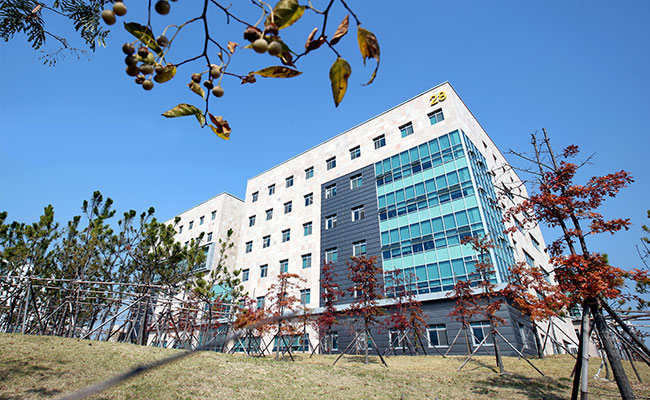
LOCATION Room 324, Building 28, College of Urban Sciences location
Introduction
The Dept. of Urban Engineering at Incheon National University aims to educate and foster creative talents who solve diverse urban problems and lead future (smart) cities. To this end, it develops and provides an integrated education and research system for future cities by organizing a convergence curriculum that links engineering approaches (smart technology-based spatial information, urban ecology and eco-friendly urban space planning and design, advanced transportation, urban safety and maintenance, etc.) with humanities and social approaches (housing policy and urban economy, urban culture, human geography, carbon neutrality, etc.) regarding duties throughout the entire urban lifecycle—including spatial big data-based urban planning, urban design, facility maintenance and safety management, and resilience.
By introducing a learning system that utilizes the convergence of accumulated knowledge linking industry, academia, research institutes, and government to diagnose and solve pressing urban problems, we produce urban engineering professionals proficient in both theory and practice. Furthermore, to achieve the paradigm of future cities, we provide multidisciplinary education to address the social, economic, transportation, environmental, and sustainability issues facing today's cities by developing, accumulating, and educating future-oriented and creative technologies for smart city planning, smart transportation, and sustainable and smart urban development based on cutting-edge technologies such as artificial intelligence, virtual reality, and IoT.
Furthermore, our Dept. of Urban Engineering is fully committed to cultivating smart urban engineering talents equipped with both theory and practice. We incorporate essential job skills into our curriculum to not only diagnose urban problems but also predict and solve future urban issues through big data analysis. We also teach specialized knowledge by developing detailed major tracks for each professor to facilitate the construction of smart urban spaces, while simultaneously conducting interdisciplinary education across these tracks.